
Musics
Possession Through Performance: How Anne Hathaway Transformed Herself for Mother Mary
Apr
1. A Role That Demanded Total Transformation
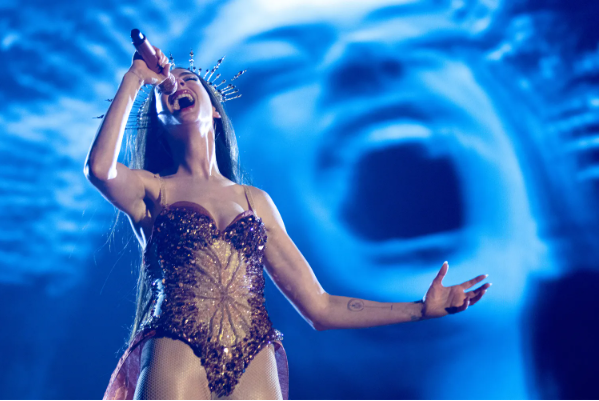
When Anne Hathaway signed on to star in the psychological musical drama Mother Mary, she was not stepping into a conventional role. The film, directed by David Lowery, required her to embody a fictional global pop icon navigating emotional collapse, artistic reinvention, and supernatural undertones. Unlike traditional music-driven films, Mother Mary blends performance, horror, and abstract storytelling into something far more experimental.
At the center of this transformation lies a performance that goes beyond acting—it borders on embodiment. Hathaway’s character is not simply portrayed; she is inhabited, often in unsettling ways. One of the most talked-about aspects of the film is a haunting dance sequence that captures this idea perfectly. The scene contains no music, no dialogue—just movement, tension, and raw emotional release.
To prepare for such a role, Hathaway committed herself fully. She didn’t approach the film as a standard acting job but as a multi-year artistic process. She trained vocally, physically, and emotionally, building a character from the inside out. Her preparation included studying real-world pop icons, refining her singing voice over months, and pushing her physical limits in dance rehearsals.
This level of dedication reflects a broader shift in Hathaway’s career. No longer confined to traditional roles, she has embraced projects that challenge both her abilities and audience expectations. Mother Mary represents perhaps the clearest example of this evolution—a film where performance is not just seen but felt, often in ways that are deliberately uncomfortable.
2. Eight Hours a Day: The Physical Demands of the “Possessed” Dance
The most striking element of Hathaway’s preparation was the sheer intensity of her training. In the months leading up to filming, she trained for up to eight hours a day to perfect a single dance sequence. This was not a montage or a background number—it was a central moment in the film, one that required absolute physical and emotional control.
The choreography, created by renowned choreographer Dani Vitale, was designed to feel raw and unfiltered. Unlike traditional dance routines that emphasize precision and polish, this sequence demanded something more chaotic. Hathaway had to move as if she were being overtaken by an unseen force—her body becoming a vessel rather than a tool.
Training at this level is not just physically exhausting; it is mentally taxing. Eight hours a day of repetition, refinement, and emotional immersion requires discipline that few actors are willing—or able—to sustain. Hathaway herself acknowledged that she could “make a documentary” about the process, highlighting just how extensive and complex it was.
Interestingly, the scene is performed without music in the final film. This choice amplifies the intensity, forcing the audience to focus entirely on movement and expression. However, during rehearsals, Hathaway practiced the routine to different pieces of music to explore varying emotional tones.
The result is a performance that feels almost primal. It is not about technical perfection but about surrender—allowing the character’s внутренний turmoil to manifest physically. This approach transforms the dance into something closer to a ritual than a performance.
3. Inspired by Jessica Chastain: Finding the “Possessed” Energy
While Hathaway’s training was rigorous, inspiration also played a crucial role in shaping the performance. She has credited Jessica Chastain as a key influence, particularly after witnessing Chastain’s stage work in A Doll’s House.
According to Hathaway, Chastain performed a “danse macabre” that left a lasting impression. The intensity, the emotional depth, and the sense of something otherworldly in that performance pushed Hathaway to go even further in her own work.
This influence is evident in the final dance sequence. Hathaway’s movements are not just expressive—they are unsettling. She described the goal as appearing “possessed,” as if something external had taken control of her body.
Director David Lowery reinforced this vision, describing the scene as “an invitation to an exorcism.” This framing transforms the dance into a symbolic act—one that represents the character’s внутренний conflict, trauma, and need for release.
The collaboration between actor and director is crucial here. Lowery’s vision provided the conceptual framework, while Hathaway’s performance brought it to life. Together, they created a moment that blurs the line between art and ritual, performance and transformation.
This influence also highlights the interconnected nature of artistic inspiration. A stage performance by one actor can ripple outward, shaping the work of another in an entirely different medium. In this case, Chastain’s theatrical intensity became a catalyst for one of the most memorable scenes in Mother Mary.
4. Acting Without Music: Emotion as the Driving Force
One of the most unconventional aspects of the dance scene is its silence. In a film centered around a pop star, the absence of music is a bold creative choice. It strips away the familiar structure of rhythm and melody, leaving only the raw physicality of the performance.
For Hathaway, this meant relying entirely on emotion to guide her movements. Without musical cues, she had to internalize the rhythm of the scene, allowing her character’s psychological state to dictate the flow.
This approach aligns with the film’s broader themes. Mother Mary is not just about performance—it is about identity, control, and the cost of fame. The silent dance becomes a metaphor for these ideas, illustrating how the character is both expressing herself and losing control simultaneously.
The setting of the scene further enhances its impact. Performed barefoot in a dark, empty space, the dance feels intimate and exposed. There are no distractions—no elaborate costumes, no stage effects—just the character and her movements.
This minimalism allows the audience to focus on the nuances of the performance. Every gesture, every shift in posture, carries meaning. The lack of music also creates a sense of unease, reinforcing the idea that something is not quite right.
In many ways, this scene represents the essence of Hathaway’s approach to the role. It is not about spectacle but about authenticity—about capturing a state of being that feels real, even when it is unsettling.
5. A Career-Defining Performance and Its Lasting Impact
The dedication Hathaway brought to Mother Mary has already led many critics to describe it as one of the most significant performances of her career. By pushing herself physically, emotionally, and creatively, she has redefined what audiences can expect from her as an actress.
The film itself has been praised for its ambition, blending elements of music, horror, and psychological drama into a unique cinematic experience. Hathaway’s performance sits at the center of this, anchoring the film’s more abstract elements in something tangible and human.
Beyond the immediate impact, the role also reflects a broader trend in Hathaway’s career. She has increasingly chosen projects that challenge conventional storytelling and demand deeper levels of engagement. This willingness to take risks has allowed her to evolve as an artist, moving beyond the roles that first made her famous.
Her preparation for Mother Mary—from years of vocal training to months of intense dance rehearsals—demonstrates a commitment to craft that goes beyond expectation. It is not just about delivering a performance but about fully inhabiting a character, even when that process is demanding or uncomfortable.
In the end, the “possessed” dance scene stands as a symbol of this commitment. It is a moment where technique, emotion, and inspiration converge, creating something that feels both controlled and chaotic.
For audiences, it offers a glimpse into the transformative power of performance. For Hathaway, it represents a milestone—a role that not only challenges her abilities but also expands the boundaries of what acting can be.
From: Candourroyaltees

